Courage in the Face of Darkness: Chris Edmonds & Caleb Altmeyer
This episode mentions abuse and may be triggering for some listeners.
Chris Edmonds: Why did Dad save his men? Who gave him the courage? I was asked by a Jewish reporter from a leading Israeli newspaper the same question. My response to him was, “Dad saved his Jewish men because a Jewish man named Jesus had saved him, had redeemed his life, and redeemed him from his inhumanity to where he could actually be who God wanted him to be.”
Courage in the Face of Darkness: Chris Edmonds & Caleb Altmeyer – Episode #537
Narrator: Welcome to the Jesus Calling Podcast. This week, we hear from Chris Edmonds, who shares the story of his father, World War II hero Roddie Edmonds, who was honored with the Medal of Honor for saving hundreds of Jewish American soldiers in a Nazi POW camp.
Next, we’ll hear from Caleb Altmeyer, founder of Helping Captives, who will tell us about a childhood friend’s tragic story, which eventually led him and his family into the fight against sex trafficking.
Let’s begin with Chris Edmonds.

Chris Edmonds: My name is Chris Edmonds. I love the Lord Jesus and I serve Him as interim pastor of Oakwood Baptist Church in Knoxville, Tennessee. That’s where I grew up. I’m also the son of World War II hero, Army Master Sergeant Roddie Edmonds.
Chris Edmonds Remembers His Father Roddie Edmonds

Growing up with [my] dad and my mom was such a blessing. They both loved the Lord, as did all my grandparents. As far back as I could go in my genealogy, we all chose to follow the Lord. And Dad, I really looked up to him and thought of him as my hero all the way through life.When I think about it, Dad was so ordinary. He was just like all the other dads and just like you and me. Yet he had this infectious love for Jesus and for others. To Dad, Jesus was the first thing, last thing, his everything. He was a Jesus guy. And I think that’s why Dad cared about everyone he met. It didn’t matter who they were.
I think my greatest and fondest memory of him is [that] he was just so full of life. He was fun to be around. He would stroll through the room, flash his warm smile, he was quick-witted, and he would show genuine love for everyone. He just had a way of lighting up the room and warming everybody’s heart. Everybody loved Roddie. They loved Dad, and he loved them. He was a good provider. He worked as a respected sales manager most of his career, and he’d seal a deal with his word and a handshake. He was honest as the day is long and hardworking, and he cared about his customers. I think one of his greatest attributes was that he loved the good book. He talked about loving the Good Lord and loving the good book, and he tried to live it.
From the moment he surrendered to Christ as a teenager at Vestal United Methodist Church in South Knoxville, God’s Word became his marching orders. And I think that’s what gave him the moral clarity he needed in the worst conditions, because he really understood life from a biblical perspective, and it sealed his moral code to where he wanted to live by that clarity.
“From the moment [Dad] surrendered to Christ as a teenager at Vestal United Methodist Church in South Knoxville, God’s Word became his marching orders. And I think that’s what gave him the moral clarity he needed in the worst conditions, because he really understood life from a biblical perspective, and it sealed his moral code to where he wanted to live by that clarity.” – Chris Edmonds
Discovering Roddie Edmonds’ Hidden World War II Story
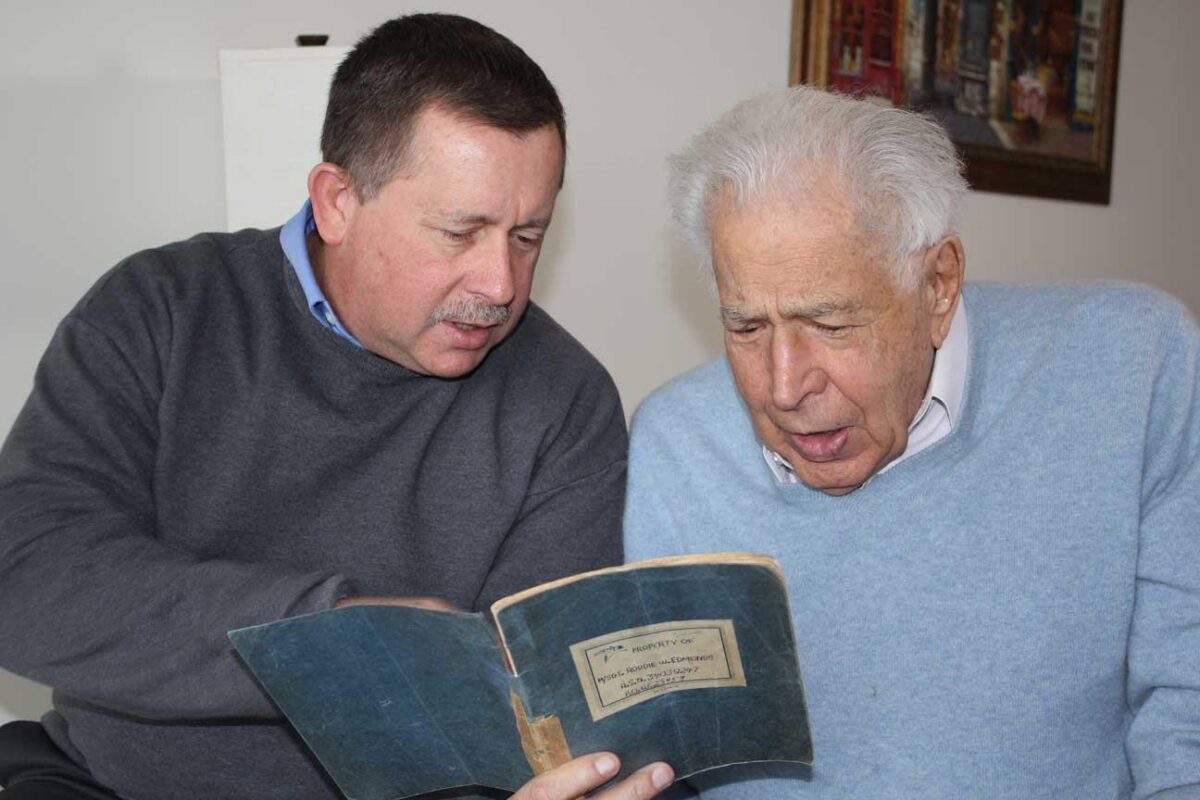
The older I get, the more I realize that my journey of discovery to really understand Dad’s experience in World War II started with his old diary. It was just a weathered, fragile book. He kept it as a young man when he was fighting in Germany. He passed away in 1985, and he never told us about his army experiences. He took it to his grave. All we knew were the broad strokes of his military service. We knew he had been a master sergeant with the 106th Infantry, and that he was captured in the Battle of the Bulge. We knew that he’d spent many harsh days at two German prisoner war camps toward the end of the war, but that’s about all we knew. He just never talked about it.
Once he passed away, his diary just sort of remained tucked away with other mementos he had from [his] service in World War II and even his life. Mom just kind of squirreled them away. And then twenty years later, after his passing—my twin daughters were born actually the year he passed away. They were six months old when he passed away. But twenty years later, they’re in college, and I’m helping one of them, my daughter Lauren, and her classmates on a college history project.
The history professor had said, “Find someone in your family that lived during a significant historical moment in time and go interview them and do a video project on them.” She came home excited because the professor had given her permission to do one on Papa Roddie even though he wasn’t alive. The reason they chose him was because he’d been a POW in World War II. I was excited for it too, so we pulled out Dad’s old diary and began looking through it. Lauren had never seen it. She’d never read it before. She was very moved by what Dad had said. And the diary, he didn’t really spell out what had happened in the camp, but you could tell that things weren’t good in his POW experience. His words I’d read before, but my heart was moved like never before. It was like the Lord clearly said in my spirit, Go find out what happened to your father.

After I watched the short video that Lauren and her team had made—they used direct quotes from Dad’s diary, and it was like a fire was sent from heaven in my spirit. His words inspired me to look further into his time as a prisoner of war.
So one evening just past midnight, I decided to search my father’s name and rank on the computer. I just Googled his name and rank, and remarkably, his name appeared in The New York Times article entitled “Richard Nixon’s Search for a New York Home.” I’m stunned at this point. The first link that came up was The New York Times article, and Dad’s name is highlighted. The article recounted how an attorney named Lester Tanner sold his historic townhouse to the President in the 1980s. The editor of The New York Times is looking back to 1980—it’s actually 2008 when he’s writing this article. In the article, Mr. Tanner, whoever that is—I didn’t know at the time—recalled the bravery of this master sergeant, Roddie Edmonds, saving his life in that POW camp. Well, that’s my father. I’m stunned. And all the questions start peppering in my mind: Who is Lester Tanner? What does he mean by bravery? Is Mr. Tanner still alive? And if so, where is he? Because I have to find him.
So I search, and I finally find him after many months. I find Mr. Tanner in New York City. And the day I met Lester, I learned the amazing story of my father’s service.
“We Are All Jews Here”: The Stalag IX-A Standoff

Mr. Tanner had been captured by the Germans as a staff sergeant in the early days of the Battle of the Bulge in the deadly forest of the Ardennes, alongside my father, who was a master sergeant from Knoxville, Tennessee. Both served in the headquarters company of 422nd Infantry Regiment, the 106th Infantry Division. Lester looked at me and he said, “What your father did is one of the most remarkable things I’ve ever witnessed.” And then he added, “It’s the defining moment of my life. Your father deserves the Medal of Honor for what he did.” And I was stunned. I hadn’t heard the story yet, but I’m thinking, What could Dad have possibly done? And then Lester shared with me what my father did that my dad never shared with any of our family or anyone that I know of.

Dad was the highest ranking American soldier in Stalag IX-A, a POW camp for non-commissioned officers near Ziegenhain, Germany. On January 26th, 1945, the Germans ordered that only the Jews were to report outside for the next morning’s roll call. Just the Jews, no one else. And anyone who disobeyed would be shot. Without hesitation, Dad said, “We’re not doing that. Tomorrow we all fall out.” That’s what they did. It was really cold that morning, January 27, 1945. As the Nazi commander approached, he was stunned. All the Americans—nearly 1,300 soldiers—were lined up in sharp formation.

Major Siegmann oversaw all German POW camps and was the eyes and ears of Hitler in the POW camps. He issued the orders, and no one had ever disobeyed his orders. Well, Siegmann rushed over to my father, and he screamed, “They can’t all be Jews!” To which my father declared, “We are all Jews here.” Well, the Nazi was furious. He pulled his pistol and pressed it hard into my father’s forehead. “Sergeant, one last chance. You will order the Jews to step forward or I will shoot you right now.”
“Well,” Lester said, “Time froze. No movement, no sounds.” He said, “It seemed like an eternity.” And then he said, “Suddenly, your father spoke. He broke the silence. He leaned into the major and looked at him in the eyes, eye to eye, man to man, even with the gun to his head, and he said, ‘Major, you can shoot me, but you’ll have to kill all of us because we know who you are. And you’ll be a war criminal when we win this war and you will pay.’” Well, Lester said, “The major blanched, turned white as a ghost and he was visibly shaken. And without warning, he slammed his pistol in his holster and fled the scene.” My father that day saved the lives of more than 200 Jewish American soldiers. Then two months later, he saved all 1,292 American soldiers when he refused orders to leave the camp on a death march. He hatched a plan the night before and all of his men followed it. They marched every other nationality out of the camp and left on with the Americans to fend for themselves. And they left them in the camp. Lester said, “All of us learned to love and respect Roddie because of his leadership. We’re alive today because of your dad’s courage.”

Why did Dad save his men? Who gave him the courage? I was asked by a Jewish reporter from a leading Israeli newspaper the same question. My response to him was, “Dad saved his Jewish men because a Jewish man named Jesus had saved him, had redeemed his life, and redeemed him from his inhumanity to where he could actually be who God wanted him to be.” And so, that’s pretty amazing that Dad had the courage to do what Dad would say anybody would’ve done in that camp. And really when you stop and think about it, that’s all God expects for us—to do what’s right for Him, for the Lord first, and then for others. If we do what’s right for the Lord, then we’re going to do what’s right for others.
“Dad saved his Jewish men because a Jewish man named Jesus had saved him, had redeemed his life, and redeemed him from his inhumanity to where he could actually be who God wanted him to be.” – Chris Edmonds
A Legacy Recognized: The White House Medal of Honor Ceremony
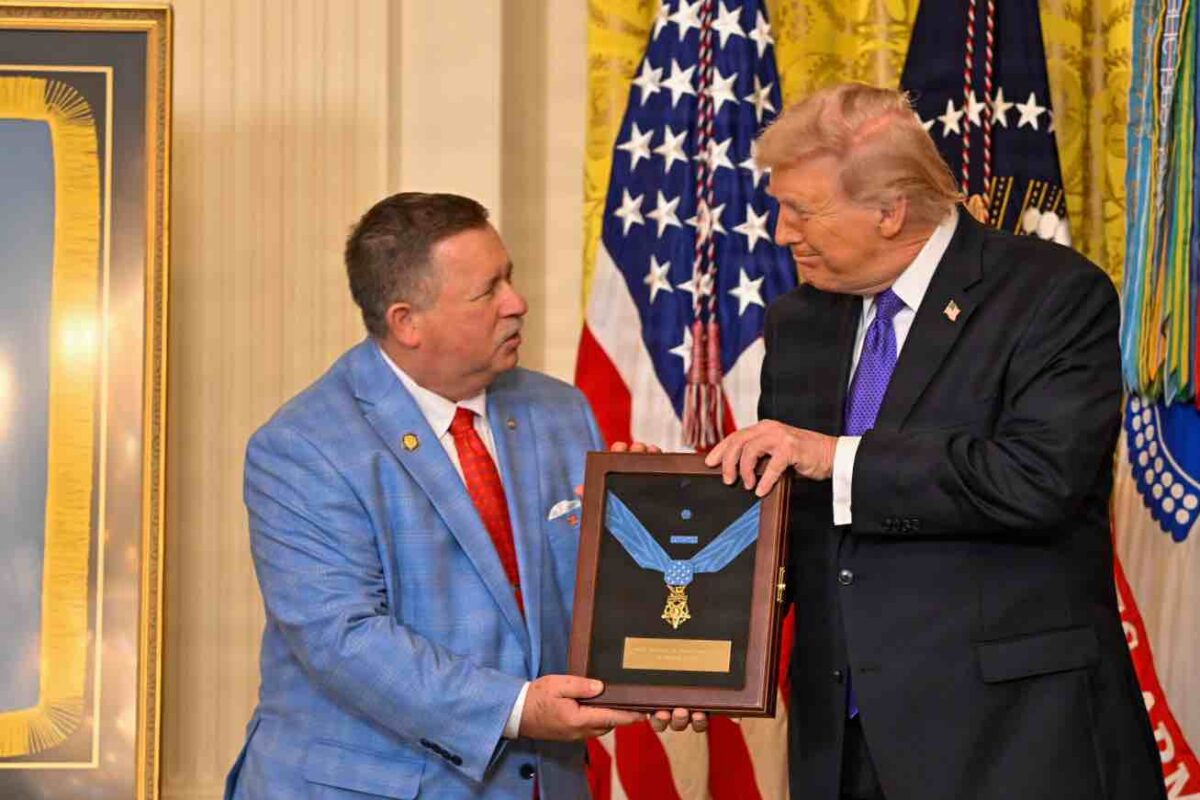
Receiving the Medal of Honor is incredible. It’s beyond words to try to describe our experience in Washington. It was out of this world. From meeting with other recipients—there were two other families there representing their loved one—and then receiving the award before a host of dignitaries and our family members. We had lots of friends there as well. And then to connect with the highest military leaders and be treated like royalty, it’s really beyond amazing, to be honest with you.

And though it’s taken thirteen years, it’s all been in God’s timing. I cherish the Scripture that says, “All that’s been accomplished, the Lord has done,” Isaiah 26:12. And I’ve done nothing except try to follow God and discover what He wanted me to know. So everything that happened—from Dad being saved in that camp and all of his boys getting out safe—that’s all the Lord’s doing. And then for it to be buried in the ashes of the Holocaust for seventy years before it ever comes to light, that’s all the Lord’s doing. And I think it’s for such a time as this, when we so desperately need to start treating people with the highest respect and honor that God calls us to.
“Dad being saved in that camp and all of his boys getting out safe—that’s all the Lord’s doing. And then for it to be buried in the ashes of the Holocaust for seventy years before it ever comes to light, that’s all the Lord’s doing. And I think it’s for such a time as this, when we so desperately need to start treating people with the highest respect and honor that God calls us to.” – Chris Edmonds

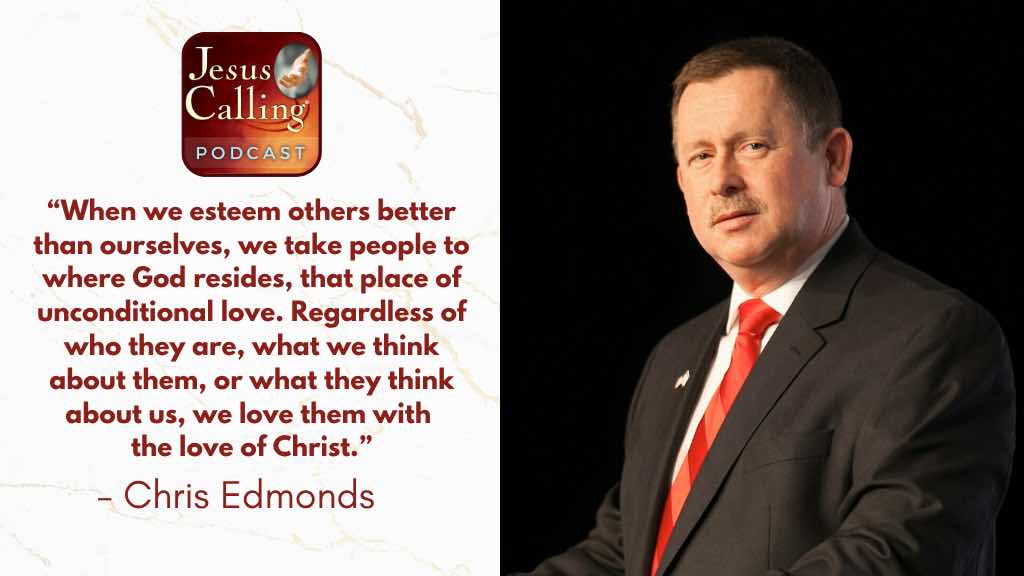
When we esteem others better than ourselves, we take people to the place where God resides, for that unconditional love—regardless of who they are, regardless of what we think about them, regardless of how they think about us, we love them with the love of Christ. And that is a love that’s beyond this world, but it’s a love that we have to share through the power of Christ. It’s pretty amazing.
“When we esteem others better than ourselves, we take people to the place where God resides, for that unconditional love—regardless of who they are, regardless of what we think about them, regardless of how they think about us, we love them with the love of Christ. And that is a love that’s beyond this world, but it’s a love that we have to share through the power of Christ.” – Chris Edmonds

And Dad shared that love in that POW camp. He even shared it with the Nazi major, because he looked at him and he told him the truth. And when you combine truth with love, it’s unstoppable. He told him the truth, he loved him enough to tell him the truth with a gun to his head, and said, “You’re going to regret this. You don’t want to do this. This is going to be the worst thing that could ever happen to you.” That’s what he was telling that guy. And thankfully, Dad’s words helped that Nazi to make the right decision. He didn’t pull the trigger. I shouldn’t be here. My family shouldn’t be here. A lot of those Jewish guys and the POWs in that camp should have been killed, but he talked the Nazi down and told him the truth and he told him in love. I hope someday in heaven when I’m there with Dad, that the old Nazi’s there and we get to celebrate that we’re all one in the Lord.
“I shouldn’t be here. My family shouldn’t be here. A lot of those Jewish guys and the POWs in that camp should have been killed, but [Dad] talked the Nazi down and told him the truth and he told him in love. I hope someday in heaven when I’m there with Dad, that the old Nazi’s there and we get to celebrate that we’re all one in the Lord. – Chris Edmonds
Today, our prayer comes from Jesus Listens, August 11th. Please join me in prayer.
My vigilant God,
I delight in these reassuring words from You: “I am with you and will watch over you wherever you go.” An adventurous journey awaits me, yet I’m anticipating it with mixed feelings. In some ways I’m eager to step into this new adventure—I’m hoping to find bountiful blessings along the way. However, part of me fears leaving my comfortable, predictable routine. When fearful thoughts assail me, please remind me that You will be watching over me constantly—wherever I am. I’m grateful that the comfort of Your Presence is a forever-promise! You’ve been teaching me that essential preparation for the journey ahead is practicing Your Presence each day. I need to keep calling to mind that You are with me and You’re taking care of me. As I walk with You along my life-path, I like to imagine Your strong hand holding on to mine. Help me to trust You, my Guide, to show me the way forward step by step. Because Your sense of direction is perfect, I don’t need to worry about getting lost. I can relax in Your Presence—rejoicing in the wonder of sharing my whole life with You!
In Your comforting Name, Jesus,
Amen

Narrator: To learn more about the story of Chris Edmonds’ father, visit www.roddieedmonds.com, and be sure to check out Chris’ book about his father’s legacy, No Surrender: A Father, A Son, and an Extraordinary Act of Heroism That Continues to Live on Today, at your favorite retailer.
Stay tuned to Caleb Altmeyer’s story after a brief message.
Ring in the Holidays with Jesus Calling Seasonal Products
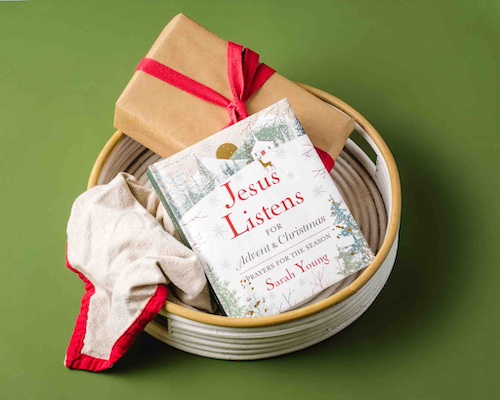
In a world that moves so fast, Christmas can feel overwhelming. But what if this season could bring you deeper peace?
Discover the Jesus Calling line of Christmas books—devotionals for all ages and stages that guide you to the heart of the season. For adults, check out the beautifully illustrated Jesus Listens for Advent and Christmas, Jesus Calling for Christmas, and Jesus Listens: Prayers for Every Season. The children in your life will love opening Jesus Calling Advent & Christmas Prayers, Jesus Calling: The Story of Christmas, and the brand-new, seasonally illustrated Jesus Listens for Christmas.
Whether you’re seeking personal renewal or the perfect meaningful gift, these books remind us that Christmas isn’t about the rush—it’s about the peace that comes from God’s love. Give the gift of quiet moments, spiritual comfort, and the true joy of Christmas.
Find Jesus Calling Christmas books at your local bookstore or visit www.amazon.com/jesuscalling.

Our next guest is Caleb Altmeyer, who has spent the past decade working to help women escape trafficking and rebuild their lives. He shares what first opened his eyes to the problem and why so much of it happens closer to home than we might think.
Caleb Altmeyer: My name is Caleb Altmeyer. I’m the founder and CEO of Helping Captives, a Christian anti-trafficking organization in the Pacific Northwest. I’m also a husband, a dad, and a speaker.
How a Childhood Friend’s Secret Inspired a Mission Toward Anti-Trafficking Work
I grew up in Spokane Valley, Washington, and my story really doesn’t begin with my childhood. It starts a bit earlier, because my mom and dad—about five months after they got married—got into a horrible car accident, which left my mom a quadriplegic. And so I was actually raised by a mom in a wheelchair.
But instead of my mom becoming depressed and deciding that there was not much to live for, she and my father decided they were going to give their whole life to the Lord and they would begin to do ministry. My dad began working at the Union Gospel Mission, which was a homeless organization up in our area. And that was kind of their life for a long time.
My mom—all she wanted to do is be a mother, but they didn’t know if they could have kids. They didn’t know if it would be too hard on them or be too hard on her. Sure enough, they got pregnant with me. And so here I come into the world, and what a crazy childhood I had. It was a lot of fun. Because my mother wanted to be a mom so much, she would be kind of like a mother to the neighborhood. Before I even showed up, she’d always be hanging out with people, and so as I came into the world, we always had neighbor kids coming over. It was always the place in the neighborhood where everybody would come and spend time.
One of the girls that we knew growing up, she would come over to our house quite a lot. She was a few years older than us, and the one memory that I remember is walking to her house to get a Disney movie, a VHS tape. I remember walking into the house and her brother turning around with a look of terror on his face saying, “What are you doing? Get those kids out of here.” And her saying, “It’s okay, Mom and Dad aren’t here, and his dad’s outside.” I don’t know about you, but when you’re four or five years old, you usually walk into somebody’s house and you’re greeted with joy, you’re greeted with a hug, everyone’s excited to see you. And that always stuck out in my mind.
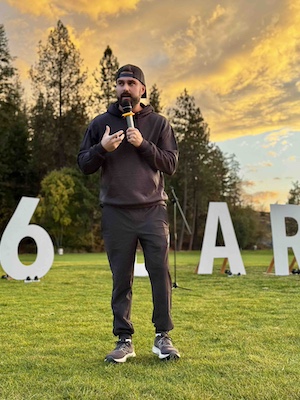
My dad got a new direction for the next season of his life, and he started a church. It was because he started that church that we’re in the fight today. That lady, that young girl that I was friends with, twenty years later she found out about my dad’s church, and she came in and told him her story. She told us that her parents had been selling her from the age of six, and the only reason she’d come over was [because] it was the only safe place in the neighborhood that she knew of. That obviously broke my dad’s heart. He came and talked to me about it. At this time, I’m running a youth center. I start talking to my staff about it [and mention that] I’m going to go up and meet with her.
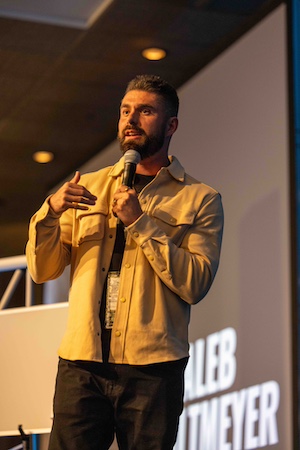
I go up to meet with her, and she tells me her story. It breaks my heart. I’m not really sure how to process it all. I go back to my staff meeting the next week, and they asked me how it went. I tell them, and one of my coworkers starts crying. She had a very similar story. Her dad worked at a prison and would sell her to his prison guard friends. And this is when everything, I think, began to shift and change in my dad’s heart and my heart from, How do we help her? to, Oh my goodness, there are a lot of people in this situation who need help.

And that’s when I was like, No matter what, we want to do something to fight this. That’s when we decided to get into the fight to stop sex trafficking. My dad retired from the mission, and we opened up the first safe house in our area. We thought we’d help two or three women. We had twenty-one women go through our house in nine months. And fast forward ten years, we just helped 412 women last year. So it has been quite the journey.
Sex Trafficking Is Likely Happening in Your Neighborhood
We have an extremely horrific problem. When you look at the United States, there’s statistics out there that say about fifty percent of all sex trafficking happens in North America—which they consider Greenland and Canada part of that. So this isn’t just something that happens overseas, this is something that happens here in our own community. And that’s why it’s the church’s job and the believers and followers of Jesus to fight this.
One out of three girls is sexually abused by the time they’re eighteen, and one out of five boys is abused by the time they’re eighteen. The majority of them are abused by somebody they know. So I want to break this idea that it’s just girls that are being kidnapped and thrown into the back of vans. That’s not what this looks like. I think, unfortunately, sometimes the movies just help us reiterate in our head, Oh, this is kids in shipping containers, and this happens overseas, when the reality is that a lot of human trafficking is happening in your own community.
“I think, unfortunately, sometimes the movies just help us reiterate in our head, Oh, this is kids in shipping containers, and this happens overseas, when the reality is that a lot of human trafficking is happening in your own community.” – Caleb Altmeyer
Eighty percent of trafficking grooming now happens online. All they have to do is go onto TikTok, Instagram, Snapchat, Facebook, and they just scroll down, and they start looking for young girls that are looking for attention. And then they start hitting them up, and DMing them, and telling them they’re beautiful, and start trying to build trust with them. What will end up happening is that they’ll start isolating them from their family members and they start desensitizing them to the sex industry, and that’s how it always works. It’s always those three things for grooming—it’s always to build trust, isolate, and then desensitize.
Traffickers exploit unmet needs. And I think one of the greatest needs that we all have is belonging. When somebody is lonely and they want to belong, it makes them an easier target because they’re willing to do whatever it takes to fit in. They’re willing to have the conversation. They’re willing to have somebody say, “You’re so beautiful,” and, “Let me talk to you,” and, “You know what, send me this picture.” And then all of a sudden, they’re sending a photo to them, and now it’s like, “Hey, keep sending these photos to me or I’m going to send this to your parents or your youth pastor.” This extortion stuff that we see all the time is unbearable. But I think a lot of it comes out of loneliness, of just wanting to fit in, and wanting to belong.
“Traffickers exploit unmet needs. And I think one of the greatest needs that we all have is belonging.” – Caleb Altmeyer
It’s easy for men to get into the homes of these young girls through technology. There’s going to be men that are looking for girls that are wanting attention and wanting love, to exploit them, and lie to them. Most of trafficking that we see is not kidnapping, it’s through the “lover boy” method, which is a guy meets a girl, makes her think he really loves and cares about her, only so that he can build a relationship with her, so that he can sell her, and get her into commercial sex work. If you’re a young person and you’re listening to this, stop talking to people online that you don’t know because it’s very, very easy for somebody to make a fake profile and act like they’re somebody that they’re not.
And then the other thing is be very, very diligent in understanding who your kids are spending time with. We just have chosen that we’re not going to do sleepovers. And that’s very strange for somebody that grew up in the 80s and 90s, where that’s all we did was have sleepovers. But most of the trauma that happened to me and the stupid stuff that I got into was never at my house. It was always at somebody else’s house. And you might trust somebody, but you don’t know their uncle, you don’t know their aunt, you don’t know their cousin, and you don’t know who’s coming in and out of the house. You don’t know what your kids are watching, what movies, or if they’re watching pornography at the neighbor’s house.

These are things that I wish parents would just know and understand, but all of that isn’t possible if you’re not actively engaged in their life and you don’t have a relationship. That’s why if you have a relationship with your kids, and you’re actively parenting them, and you have a good relationship and know who they’re talking to, the chances of them being trafficked are much lower. I can’t say this enough: build relationships with vulnerable young people. Traffickers are really good at finding vulnerable people. The church should be better at finding them first.
“If you have a relationship with your kids, and you’re actively parenting them, and you have a good relationship and know who they’re talking to, the chances of them being trafficked are much lower. I can’t say this enough: build relationships with vulnerable young people. Traffickers are really good at finding vulnerable people. The church should be better at finding them first.” – Caleb Altmeyer
From a Strip Club to a Freedom Center

When we look at the life of Jesus, He gets baptized, He gets filled with the Spirit, He goes out into the desert, He gets tempted, He goes and gets His disciples, and the first place He heads is Nazareth. He’s heading home. I’m going home. I’m telling the community this is what my ministry is going to be about. And of all the things that He could say, He goes into the synagogue, He opens up the book of Isaiah, and He reads, “The Spirit of God has anointed Me to preach goodness to the poor, to bind up the brokenhearted, and set the captives free.” Boom! These are the first three things that He says, “This is what my ministry is going to be known for, we want to be setting captives free.”
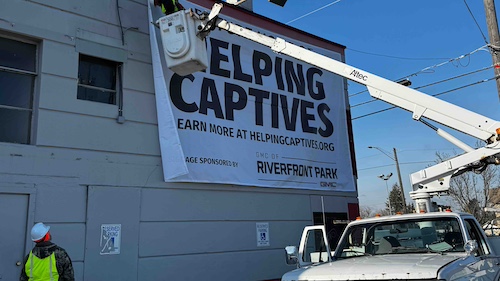
And the perfect example that I could say to you about this is our new building, the Freedom Center, that we just purchased and that we’re building. The reason why this is a perfect example is because Spokane—where I’m from―is the city that founded Father’s Day. In that city was a gentleman’s club or a strip club, and basically, what you would do with the gentleman’s club is you would tell women, “If you want my attention, come take your clothes off.” Right? And so what we did as a community is we actually bought the club. It had shut down, and we wanted to make sure nobody could reopen it. So we purchased the strip club and we essentially shut it down for good, and we are now turning that strip club into a Freedom Center because the men in the community are saying, “Hey, we don’t want to be known for objectifying our women and kids anymore. We want to be known for healing our women and kids.” We’re actually building the nation’s first Freedom Center for sex trafficking survivors, and it happens to be in the city that founded Father’s Day, and it happens to be the only strip club that is no longer around. And so, the Lord has been doing some incredible things. Because when you understand that this is happening in our communities and you understand what it actually looks like and you’re filled with the Holy Spirit, you start to see things that other people just don’t see. You start to pay attention to vulnerable people around you.
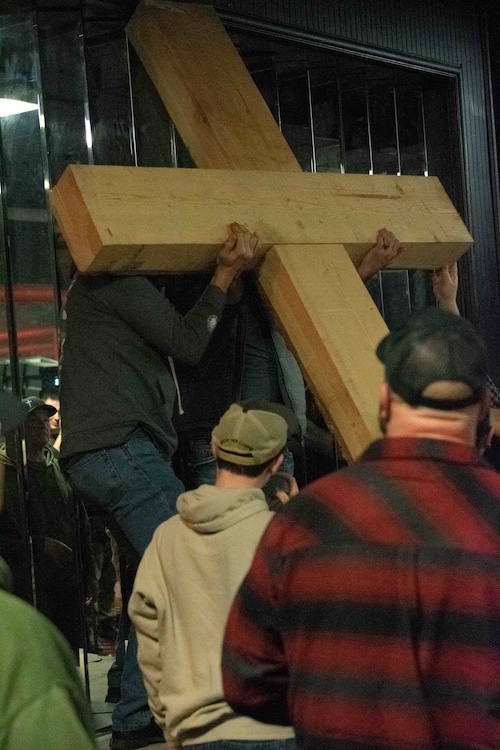

Narrator: To learn more about Caleb Altmeyer and his work, you may visit www.helpingcaptives.org, and please be sure to follow him on social media.
If you’d like to hear more stories of incredible courage, check out our interview with Jochen Wurfl.
Next week: Giavani Cairo
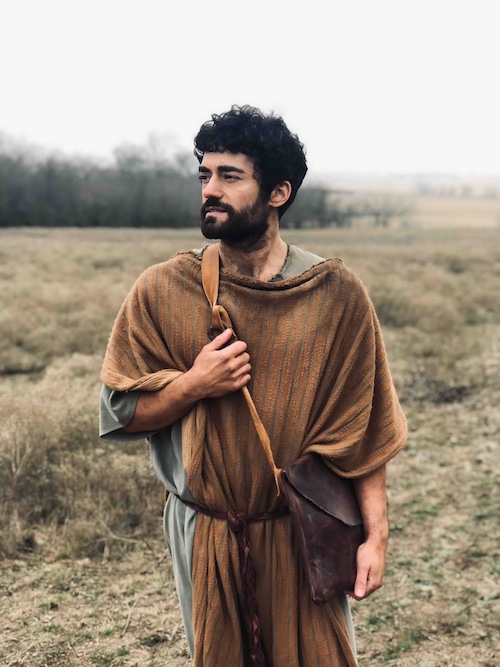
Next time, on the Jesus Calling Podcast, we’ll hear from actor Giavani Cairo, who plays Thaddeus on The Chosen, about finding confidence through acting and how the character he plays has changed the way he sees his own life.
Giavani Cairo: I want to be a part of projects that have an impact in the way God has had an impact on me. So I see my work differently now.